

Navigating the global crypto regulatory landscape presents a formidable challenge for startups, virtual asset service providers, and financial institutions. Whilst many jurisdictions offer fragmented or evolving frameworks, the UAE has emerged as a clear leader with comprehensive crypto laws that provide certainty, tax efficiency, and alignment with international standards. For businesses seeking to launch exchanges, custody services, or tokenisation projects, UAE crypto law delivers a structured path to licensing and compliance. This article explores the key advantages that make the UAE an attractive jurisdiction for crypto enterprises, from multi-regulator clarity to robust market growth and institutional trust.
Key Takeaways
| Point | Details |
|---|---|
| Multi regulator clarity | The UAE offers a clear multi regulator framework with five regulators overseeing different activities and zones, enabling tailored licensing. |
| Licensing timelines | Application timelines vary from four to twelve months depending on business complexity and regulator. |
| 0% personal crypto tax | There is 0% personal income and capital gains tax on crypto for individuals. |
| Global standards alignment | The regime aligns with international standards, attracting major crypto firms and institutional participation. |
| Compliance complexity | Businesses should plan carefully to navigate activity specific rules, capital requirements and ongoing supervision. |
Clear multi-regulator framework suited for varied crypto activities
The UAE's approach to crypto regulation stands out for its clarity and specialisation. Unlike jurisdictions with a single, one-size-fits-all regulator, the UAE crypto laws provide a clear, multi-regulator framework tailored for VASPs, startups, and financial institutions. Five distinct regulators oversee different activities and zones, ensuring businesses can select the authority best aligned with their operations.
VARA governs virtual asset activities in Dubai, whilst ADGM's Financial Services Regulatory Authority and DIFC's Financial Services Authority manage crypto operations in their respective free zones. The Central Bank of the UAE (CBUAE) oversees payment tokens and stablecoins, and the Securities and Commodities Authority (SCA) regulates security tokens at the federal level. This structure enables activity-specific licensing for exchanges, custody, proprietary trading, and token issuance, reducing regulatory ambiguity.
Licensing timelines vary from four to twelve months depending on the complexity of your business model and the chosen regulator. Startups launching a simple exchange may secure approval faster than firms offering multi-jurisdictional custody or proprietary trading. The virtual asset platform compliance UAE framework ensures each regulator maintains clear application processes, capital requirements, and governance standards.
Key features of the multi-regulator framework include:
- Tailored licensing pathways for exchanges, brokers, custody providers, and token issuers
- Clear capital requirements and governance standards specific to each activity type
- Transparent application processes with defined timelines and documentation checklists
- Regulatory sandboxes for testing innovative products before full licensing
- Ongoing supervision and compliance monitoring to maintain market integrity
For detailed guidance on navigating the various regulators, explore UAE crypto regulations explained and visit the VARA official portal for Dubai-specific requirements.
Significant tax benefits for crypto businesses in the UAE
Tax efficiency remains one of the most compelling reasons crypto enterprises choose the UAE. The jurisdiction offers 0% personal income and capital gains tax on crypto, enabling founders, investors, and employees to retain the full value of their digital asset holdings. This zero-tax environment applies to individuals regardless of residency status, making the UAE attractive for high-net-worth crypto investors and startup teams.
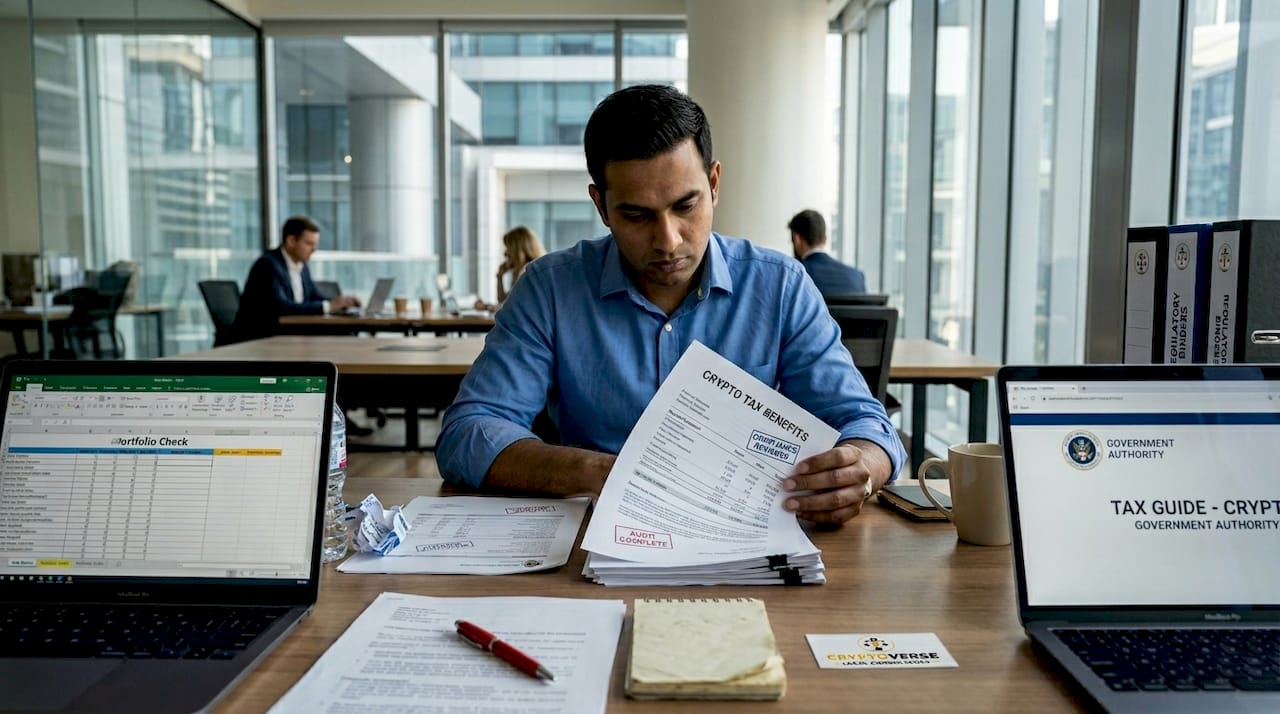
Corporate tax in the UAE is equally favourable. Businesses pay 9% corporate tax only on annual profits exceeding AED 375,000, with the first AED 375,000 taxed at 0%. For early-stage startups and small VASPs, this threshold provides years of tax-free operation during the critical growth phase. Free zone entities may qualify for additional incentives, including extended tax holidays and 100% foreign ownership.
VAT exemptions further enhance financial efficiency. Since 2018, all crypto-related transactions have been VAT exempt, with the exemption applied retroactively. This means exchanges, brokers, and custody providers do not charge VAT on trading fees, withdrawal fees, or custody services. The exemption simplifies pricing structures and improves competitiveness compared to jurisdictions where VAT adds 15% to 20% to transaction costs.
Key tax advantages include:
- Zero personal income tax and capital gains tax on all crypto holdings and transactions
- 9% corporate tax applies only above AED 375,000 annual profit threshold
- VAT exemption on all crypto transactions since 2018, applied retroactively
- Free zone incentives offering extended tax holidays and full foreign ownership
- No withholding tax on dividends, interest, or royalties for most entities
Pro Tip: Structure your entity within a free zone to maximise tax benefits and streamline licensing. Consult with specialists in virtual asset brokers compliance UAE to ensure your setup qualifies for all available incentives whilst meeting regulatory requirements.
Global standards alignment and institutional trust
The UAE's commitment to global standards alignment distinguishes it from many emerging crypto jurisdictions. The country has implemented the FATF Travel Rule, MiCA-comparable frameworks for capital requirements and custody, and robust AML measures that meet international expectations. This alignment attracts major players like Binance and OKX, who require regulatory certainty to operate at scale.
Capital requirements under UAE crypto law mirror those in established financial centres. VASPs must maintain minimum capital reserves proportional to their activity type and transaction volumes, ensuring financial stability and customer protection. Custody providers face stringent rules on asset segregation, insurance, and operational security, comparable to standards in the EU and Singapore.
Stablecoin approvals represent a significant milestone in building institutional trust. VARA and CBUAE have approved multiple stablecoin issuers, signalling confidence in the regulatory framework's ability to oversee payment tokens. These approvals facilitate cross-border payments, remittances, and institutional treasury management, positioning the UAE as a hub for regulated stablecoin activity.
Key elements of global standards alignment include:
- FATF Travel Rule implementation for all virtual asset transfers above specified thresholds
- MiCA-comparable capital requirements, custody rules, and operational resilience standards
- AML and CTF frameworks aligned with FATF recommendations and UAE Federal AML Law
- Stablecoin licensing regime attracting institutional issuers and payment providers
- Cross-border interoperability enabling seamless compliance across multiple jurisdictions
"The UAE's regulatory framework has set a benchmark for the region, combining rigorous compliance standards with a business-friendly environment that attracts global crypto leaders."
For businesses operating across multiple regulators, understanding regulated activities under VARA ensures you meet all requirements and avoid costly compliance gaps.
Empirical growth and innovation driven by regulatory clarity
Regulatory clarity has translated into measurable market growth. VARA has licensed over 500 VASPs managing $25 billion in assets as of 2026, demonstrating the framework's capacity to support diverse business models at scale. This growth reflects confidence among startups, established exchanges, and institutional players that the UAE offers a stable, long-term environment for crypto operations.
User adoption metrics reinforce this trend. The UAE ranks in the top 20 globally for crypto adoption according to Chainalysis 2024 data, with a 241% increase in crypto app downloads and 210% growth in active users. These figures indicate strong retail and institutional interest, supported by clear regulations that reduce perceived risk and encourage participation.
Job creation further illustrates the economic impact of UAE crypto law. The sector has generated over 12,000 jobs across legal, compliance, technology, and operations roles. This talent pool supports continued innovation and positions the UAE as a regional hub for blockchain expertise.
| Metric | 2026 Figure | Growth Rate |
|---|---|---|
| Licensed VASPs | 500+ | N/A |
| Assets under management | $25 billion | N/A |
| Crypto app downloads | N/A | 241% increase |
| User adoption | N/A | 210% growth |
| Jobs created | 12,000+ | N/A |
Key growth indicators include:
- Rapid licensing approvals enabling faster time to market for compliant businesses
- Institutional capital inflows driven by regulatory certainty and tax efficiency
- Expanding ecosystem of service providers including legal, audit, and technology firms
- Government initiatives supporting blockchain innovation and digital economy development
Pro Tip: Leverage the UAE's growing ecosystem by partnering with established service providers and engaging early with your chosen regulator. Review UAE blockchain frameworks 2026 to align your strategy with current market dynamics.
Navigating compliance complexity and staying ahead
Whilst UAE crypto law offers significant advantages, multi-regulator overlap requires careful jurisdiction choice. Businesses must evaluate which regulator aligns with their activity type, target market, and growth plans. Selecting the wrong regulator can result in delays, higher costs, or licensing rejection.
Marketing rules present another compliance challenge. Strict regulations on advertising and promotional activities impose fines up to AED 10 million for violations. VASPs must ensure all marketing materials include required disclosures, avoid misleading claims, and comply with platform-specific guidelines.
New federal laws introduced by CBUAE in 2025 impose harsh penalties for unlicensed crypto activities, including fines up to $136 million. These measures target unregulated exchanges and fraudulent schemes, but compliant businesses must ensure their licences cover all activities to avoid inadvertent breaches.
Compliance costs can consume 15% to 20% of operating budgets, particularly for startups without in-house legal expertise. Ongoing obligations include annual audits, AML monitoring, transaction reporting, and regulatory filings. Budgeting for these expenses from the outset prevents cash flow challenges and ensures sustained compliance.
Key compliance considerations include:
- Strategic regulator selection based on activity type, capital availability, and market focus
- Comprehensive marketing compliance to avoid fines and reputational damage
- Licence scope verification to ensure all activities are covered and authorised
- Budget allocation for ongoing compliance costs including audits and reporting
- Proactive engagement with regulators to address questions and clarify requirements
For guidance on structuring compliant operations, explore crypto proprietary trading setup UAE and engage specialists early in your planning process.
How Cryptoverse legal consultancy supports your crypto business
Navigating UAE crypto law requires specialised expertise and deep regulatory knowledge. Cryptoverse Legal Consultancy guides businesses through the UAE's multi-regulator framework, ensuring you select the right authority and meet all licensing requirements efficiently. Our team of crypto-native lawyers combines technical blockchain understanding with regulatory insight, delivering solutions that stand up to scrutiny.
We support licensing under VARA regulations & licensing, ADGM, DIFC, and other regulators, tailoring strategies to your business model and growth ambitions. From pre-application planning to full approval, we manage documentation, capital structuring, compliance frameworks, and ongoing regulatory engagement. Our services extend to digital asset legal consultancy across tokenisation, stablecoin issuance, and real-world asset projects.
Compliance strategies we design minimise risks and costs, enabling you to focus on growth whilst meeting all legal requirements. Whether you're launching an exchange, custody service, or proprietary trading desk, our expertise in regulated activities under VARA ensures your operations remain compliant and competitive. With offices across Dubai, Fujairah, and partnerships in 25+ markets, we deliver global reach with local expertise tailored to crypto startups, VASPs, and financial institutions.
What are the advantages of UAE crypto law?
What makes UAE crypto law attractive for startups and VASPs?
UAE crypto law offers clear multi-regulator frameworks, 0% personal crypto tax, 9% corporate tax only above AED 375,000 profit, and VAT exemption on all transactions. Licensing timelines of four to twelve months and alignment with FATF and MiCA standards provide certainty and efficiency for businesses seeking rapid market entry.
How do I choose the right regulator for my crypto business?
Select a regulator based on your activity type, target market, and capital availability. VARA suits Dubai-based exchanges and custody providers, whilst ADGM and DIFC cater to institutional clients and international operations. Evaluate capital requirements, licensing timelines, and ongoing compliance obligations before deciding.
What compliance risks should I be aware of under UAE crypto law?
Non-compliance with marketing rules risks fines up to AED 10 million. New CBUAE laws impose penalties up to $136 million for unlicensed activities. Multi-regulator overlap requires careful jurisdiction choice to avoid licensing gaps. Budget 15% to 20% of operating costs for ongoing compliance including audits and reporting.
How does UAE crypto law benefit financial institutions entering Web3?
Financial institutions gain access to clear custody and stablecoin frameworks, institutional-grade compliance standards, and tax-efficient structures. Global standards alignment facilitates cross-border operations and interoperability. Licensing under ADGM or DIFC enables institutions to offer crypto services to high-net-worth clients whilst meeting regulatory expectations. For custody-specific guidance, review safe custody compliance UAE.
What licensing timelines and costs should I expect?
Licensing timelines range from four to twelve months depending on activity complexity and regulator. Application fees vary from AED 50,000 to AED 150,000, with annual licensing fees and capital requirements adding to costs. Budget for legal, audit, and compliance expenses throughout the application process and ongoing operations.
Recommended
- Why crypto businesses need legal advice in the UAE 2026 - Cryptoverse Legal Consultancy
- Blockchain and Web 3 Lawyer UAE | Crypto lawyer for Startup
- UAE Blockchain Legal Frameworks 2026: Navigate Licensing - Cryptoverse Legal Consultancy
- UAE crypto licensing tips 2026: navigate approvals fast - Cryptoverse Legal Consultancy